

What Is Event Branding?
Event branding is the strategic use of visual identity, messaging, design, technology and guest experience to make an event feel unmistakably connected to a brand.
For those wondering what is event branding, it includes everything guests see, hear and interact with — from invitations and registration desks to stage design, projection walls, signage, lighting, presentation templates, photo corners, digital content and post-event communication.
In corporate event branding, the goal is not only to make the event look good. The real goal is to make the brand easier to remember, understand and emotionally connect with.
A strong event brand answers three questions:
- Who is hosting this event?
- What should guests feel during the event?
- What should they remember afterwards?
When these answers are reflected consistently across the whole event, the result feels polished, intentional and professional.
Why Event Branding Matters for Corporate Events
Corporate events are often built around important business goals:
- launching a product,
- strengthening relationships,
- motivating teams,
- presenting a new strategy
- or celebrating company success.
Good event branding supports these goals by creating a clear and memorable environment. It helps guests understand the message faster, engage with the programme more naturally, and associate the experience with the company behind it.
For brands, this matters because events are no longer judged only by the agenda. They are judged by the full experience.
Guests remember:
- how they felt when they entered the venue,
- how easy it was to navigate the space,
- how impressive the stage looked,
- how naturally the brand appeared in the environment
- and whether the event felt different from others they had attended.
As we often see at Cubex Centre Prague, the strongest branded events are not necessarily the ones with the largest logos. They are the ones where the brand is present in a thoughtful, consistent and visually powerful way.
Event Branding Starts Before Guests Arrive
Event branding begins long before the first guest enters the venue.
The first touchpoints usually include:
- the invitation,
- event website,
- registration form,
- confirmation email,
- agenda,
- social media communication
- and pre-event reminders.
These elements set expectations and prepare guests for the experience.
If the digital communication looks premium, clear and consistent, guests arrive with a stronger sense of importance and anticipation. If it feels generic, the event may already lose part of its impact before it begins.
Pre-Event Branding Ideas
Use the same visual identity across all digital materials. Keep colours, fonts, tone of voice and key messages consistent. Create a short event tagline that explains the purpose of the event clearly. Include branded visuals in invitations, registration confirmations and calendar invites.
For larger corporate events, it can also be useful to create a dedicated event landing page. This gives guests one central place for the agenda, venue information, speaker details and practical instructions.
First Impressions: Branding the Arrival Experience
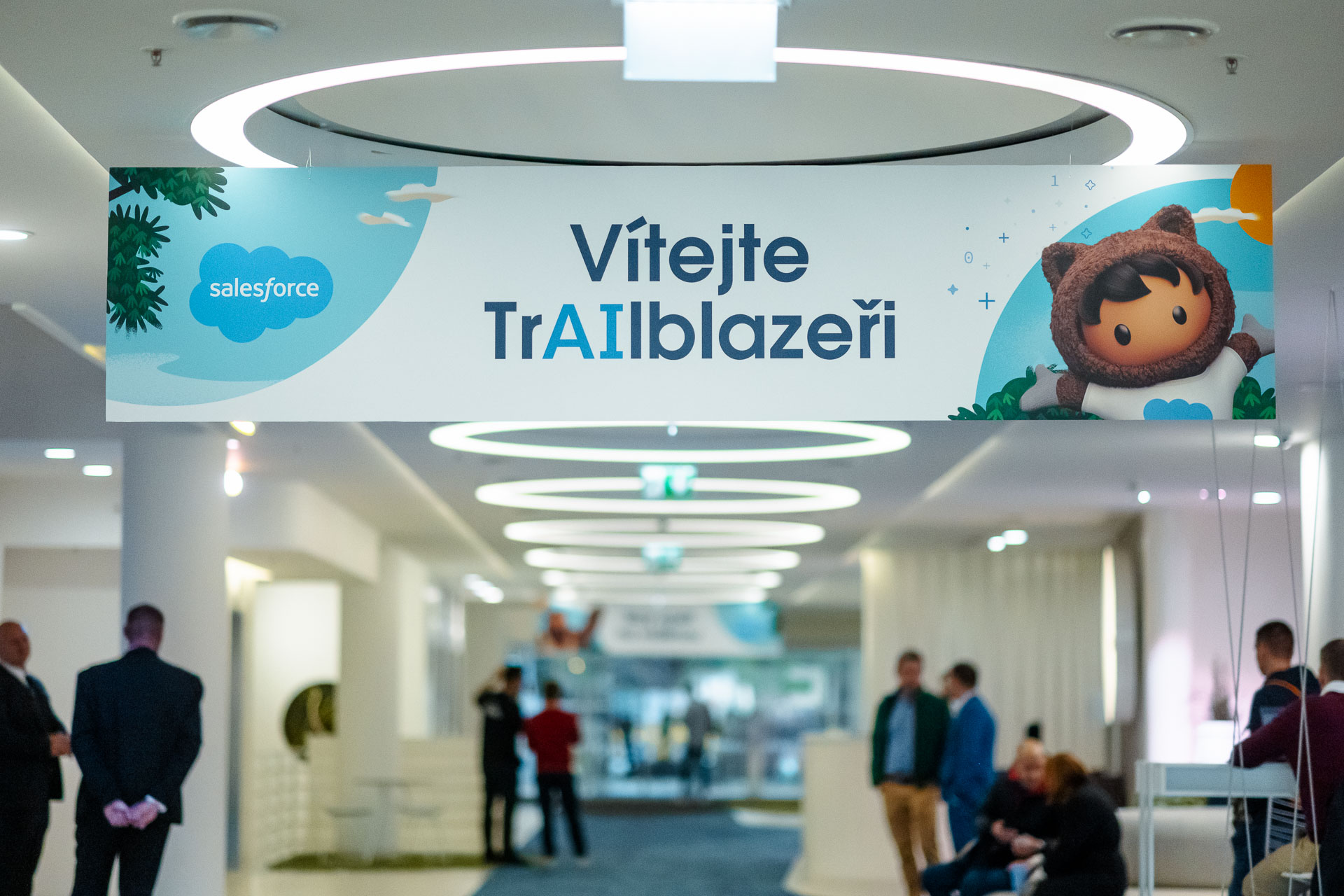
The arrival moment is one of the most important parts of event branding.
Guests immediately start forming an opinion when they enter the venue. They notice:
- the signage,
- lighting,
- registration area,
- host team,
- welcome screens,
- branded visuals
- and the overall atmosphere.
A strong arrival experience makes guests feel that they are part of something carefully planned.
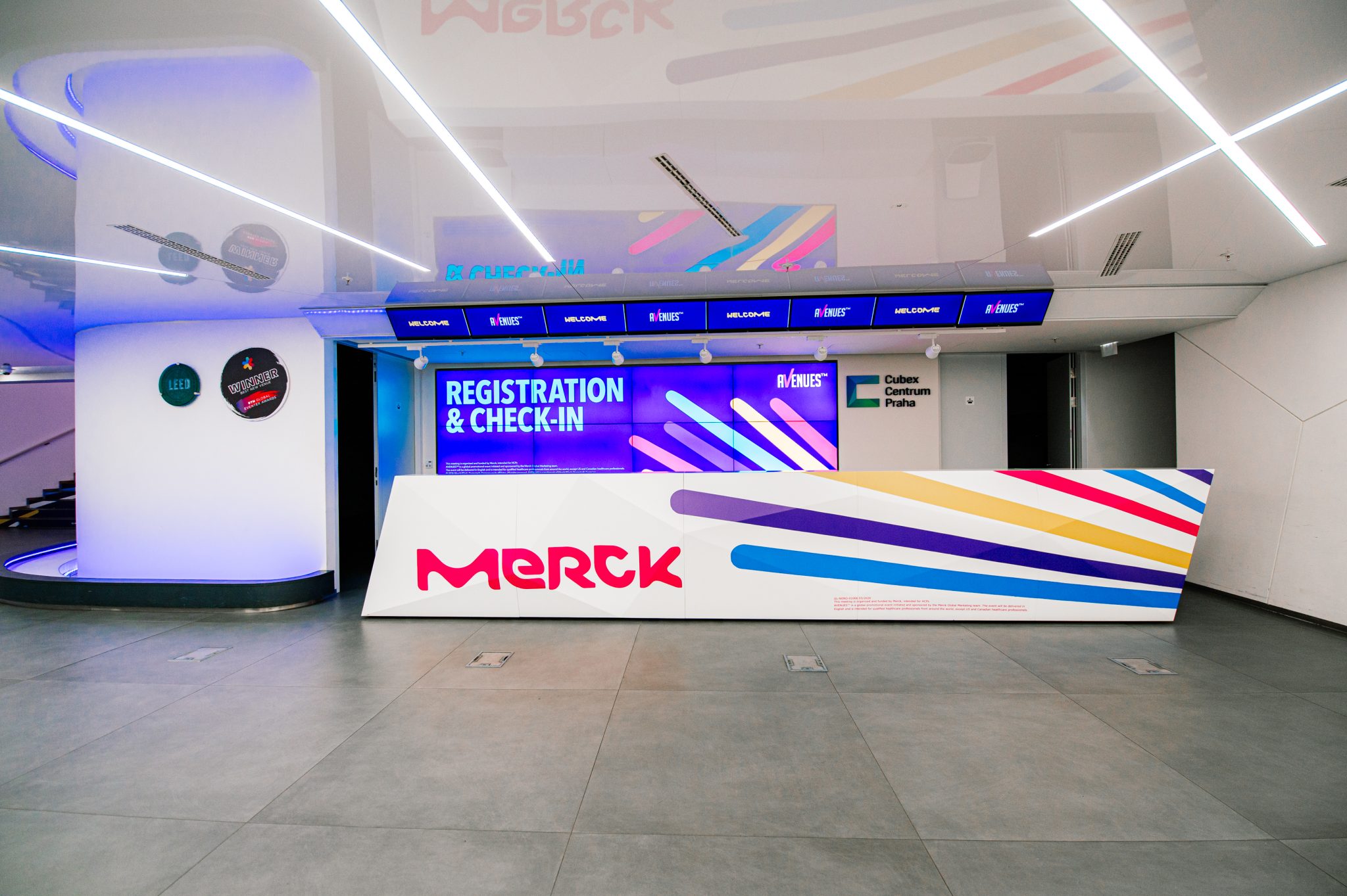
At Cubex Centre Prague, this part of the event can be supported by large-format digital surfaces, foyer branding, navigation elements, projection areas and flexible layouts. This allows brands to create a clear visual welcome without making the entrance feel crowded or overdesigned.
Corporate Event Branding Ideas for the Entrance
- Use branded welcome screens to greet guests by event name.
- Place clear directional signage in the same visual style as the event identity.
- Add subtle lighting in brand colours.
- Create a branded registration desk or check-in area.
- Use digital content to show event highlights, speaker names, programme information or partner logos.
The key is clarity. Guests should instantly know where they are, where to go and what kind of experience they are entering.
Stage Design as the Heart of Event Branding
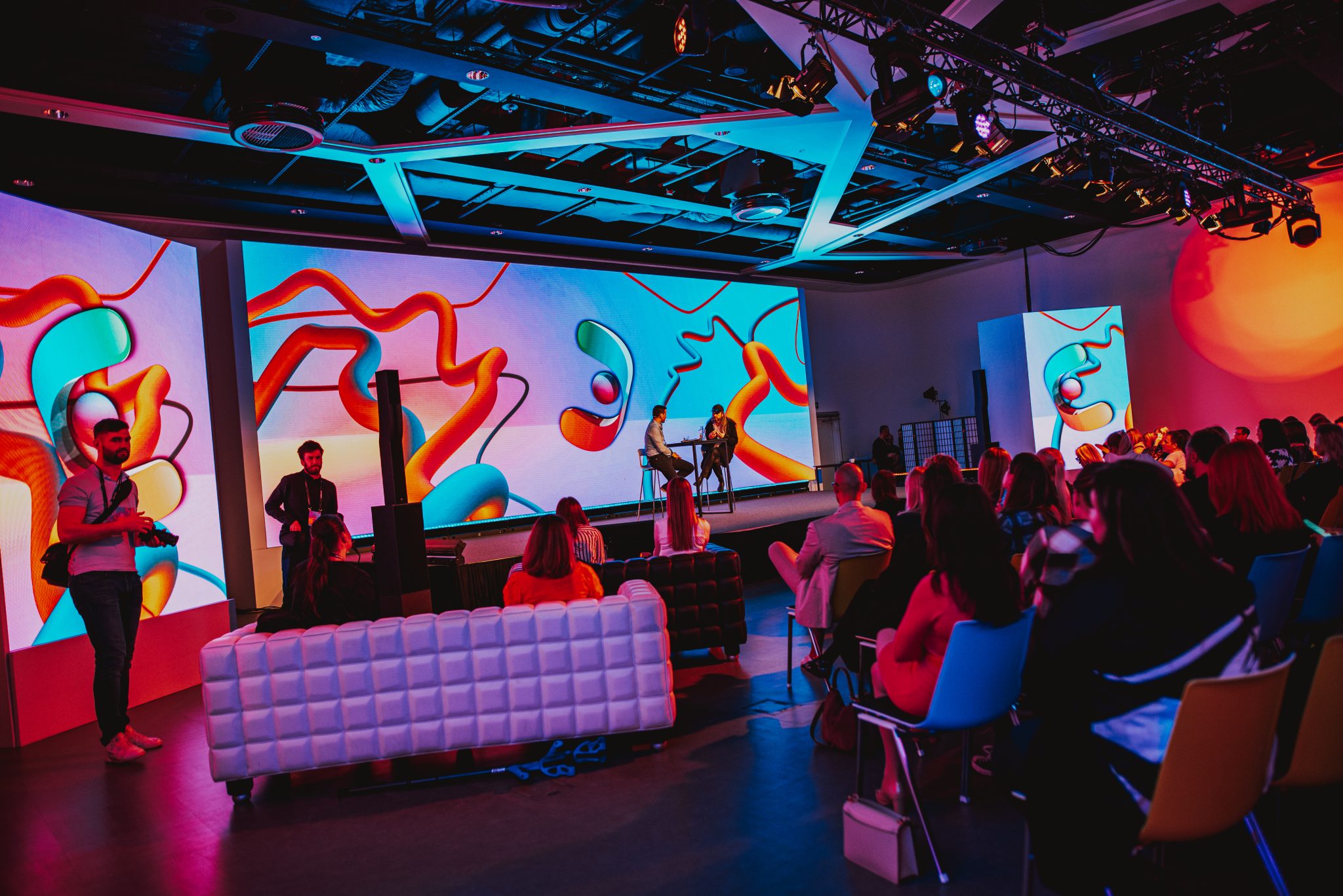
For conferences, product launches, awards ceremonies and corporate presentations, the stage is often the visual centre of the event.
This is where attention is focused for the longest time. It is also the place most likely to appear in photos, videos, livestreams and social media posts.
That makes stage design one of the most valuable tools in event branding.
A branded stage does not need to be complicated. It needs to support the event message, look good on camera and stay visually consistent throughout the programme.
Event Branding Examples for Stage Design
For a leadership conference
- the stage can use a clean corporate visual identity, speaker name slides and subtle animated backgrounds.
For a product launch
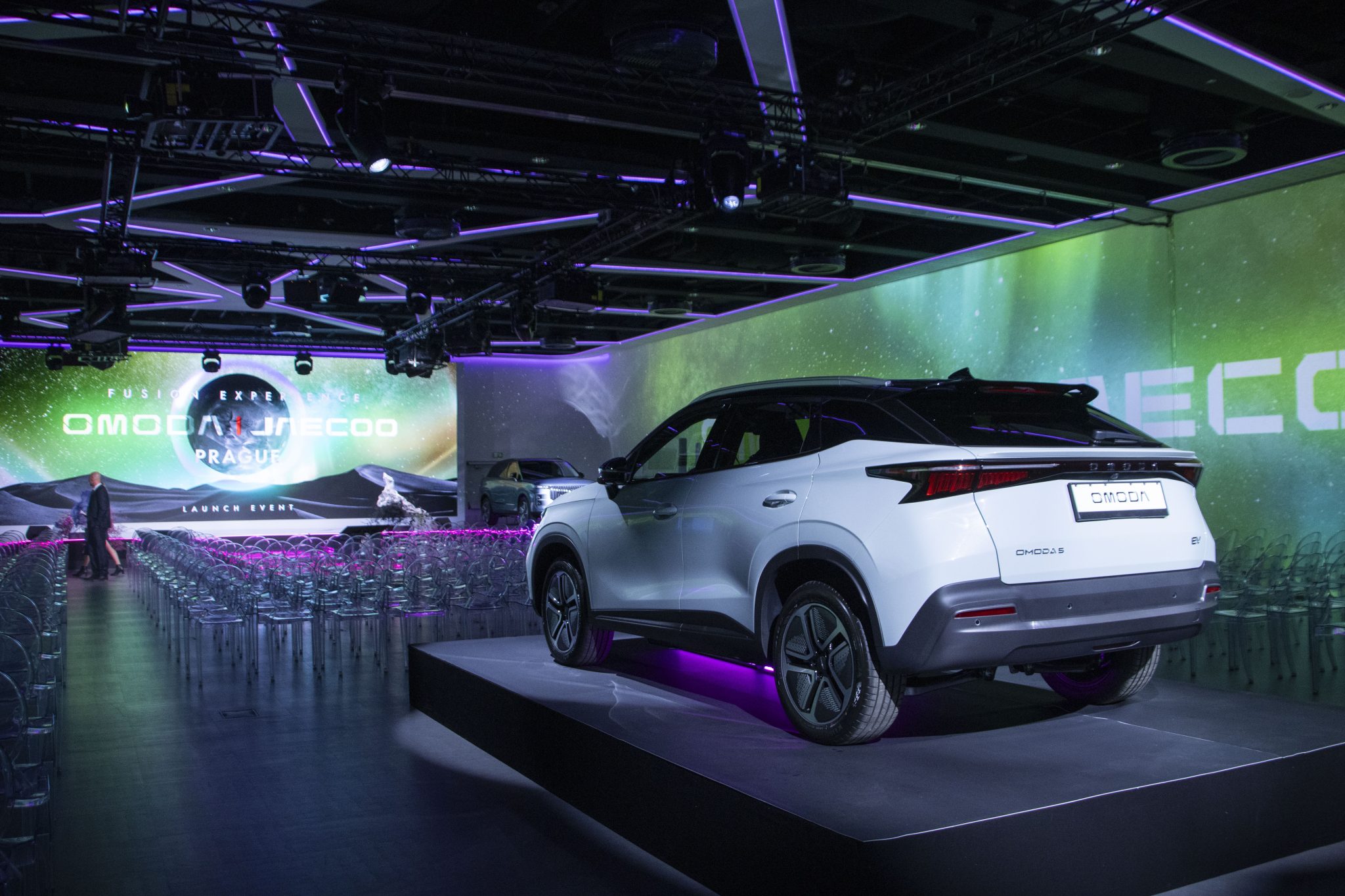
- the stage can become more immersive, using LED screens, projection mapping or dynamic content to build anticipation.
For a gala diner
- branding can be more elegant, with light design, premium visuals and carefully timed reveal moments.
At Cubex Centre Prague, LED screens, projection surfaces and flexible stage setups make it possible to adapt the visual style to different types of corporate events — from minimalist conferences to high-impact brand presentations.
👉 READ OTHER USEFUL TIPS HERE